
How to Convince Your CFO That Compliance Matters
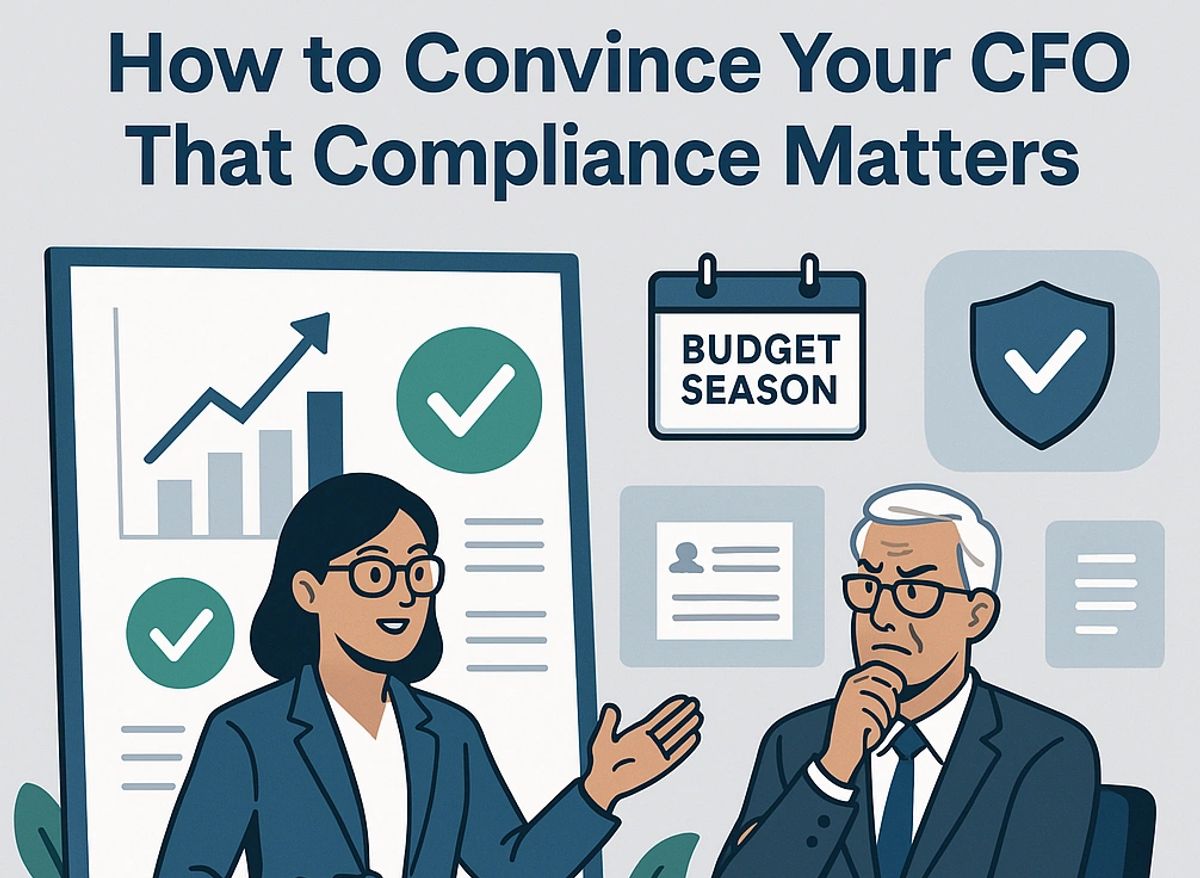
It seems every year I write a blog about budget season. And every year feels a little like Groundhog Day. What’s worse is every year, it starts earlier, hence, this post in mid-July. It’s not just the timing that feels familiar, though. It’s the conversations I have with compliance leaders who are gearing up to ask for funding to modernize their programs, many of whom have been having the same conversation for years.
Here’s what I’ve come to realize: most compliance leaders want to move forward. They’re fully aware that outdated, inadequate systems are burning out their teams and failing to reduce the firm’s regulatory or reputational risk. Motivation isn’t the issue - it’s the fear of not being able to make a compelling business case that stops them from securing the budget they need.
Why? Because for many CFOs, compliance still looks like a cost center. And if there’s one thing CFOs are wary of, it’s spending money without a clear, measurable return. That’s why compliance initiatives often lose out to projects like marketing campaigns that deliver immediate results - clicks, conversions, cost per acquisition.
But here’s the reality: your brand is only as strong as your compliance program. Without a solid foundation, you risk damaging trust, facing regulatory scrutiny, and losing business to competitors with stronger reputations.
Compliance Is NOT a One-Year Payoff - It’s Compound Interest
Think of compliance as an investment that compounds over time. The early gains might be subtle - but the long-term return is substantial: stronger brand equity, better operational efficiency, and greater stakeholder confidence.
Recent data backs this up:
- A 2025 Gartner study found that firms with strong ethical and compliance cultures outperform peers by 2.3× in key business outcomes.
- A joint survey from Kompliant and Equifax revealed that 90% of financial services firms see compliance tech as critical to staying competitive.
- And tellingly, 56% of those firms involve their CEOs in compliance technology decisions—proof that it’s not just a back-office concern anymore.
The takeaway? The most forward-thinking leadership teams no longer see compliance as overhead. They see it as a strategic enabler.
Why CFOs Should Care
The case for compliance goes far beyond regulatory risk. It delivers tangible business value:
- Talent magnet: A strong compliance culture attracts high performers and boosts retention. Top professionals want to work for companies that walk the talk.
- Lower regulatory friction: Trusted firms face fewer audits, less scrutiny, and smoother regulatory relationships.
- Cost savings: Fewer fines, lower turnover, and less need for external remediation efforts add up quickly.
As Jim Collins puts it in his book Good to Great, exceptional companies are built on exceptional people. A culture of compliance creates the trust, alignment, and accountability those people need to thrive.
Making the Case to the CFO
If your CFO asks, “Why should we invest in compliance?” here is what you can say:
- Firms with strong compliance programs outperform by 2.3×
- Over 80% of U.S. investors (and 83% globally) factor compliance and sustainability into capital allocation decisions
- 90% of financial institutions are actively investing in compliance technology to stay competitive
Final Thought: Compliance Is an Investment, Not an Expense
It’s time to stop viewing compliance as a sunk cost. It’s a strategic asset—and like compound interest, its value builds over time. Companies that neglect it always pay for it later.
NOTE: This article was originally published on TabbFORUM - the Capital Markets Blog